
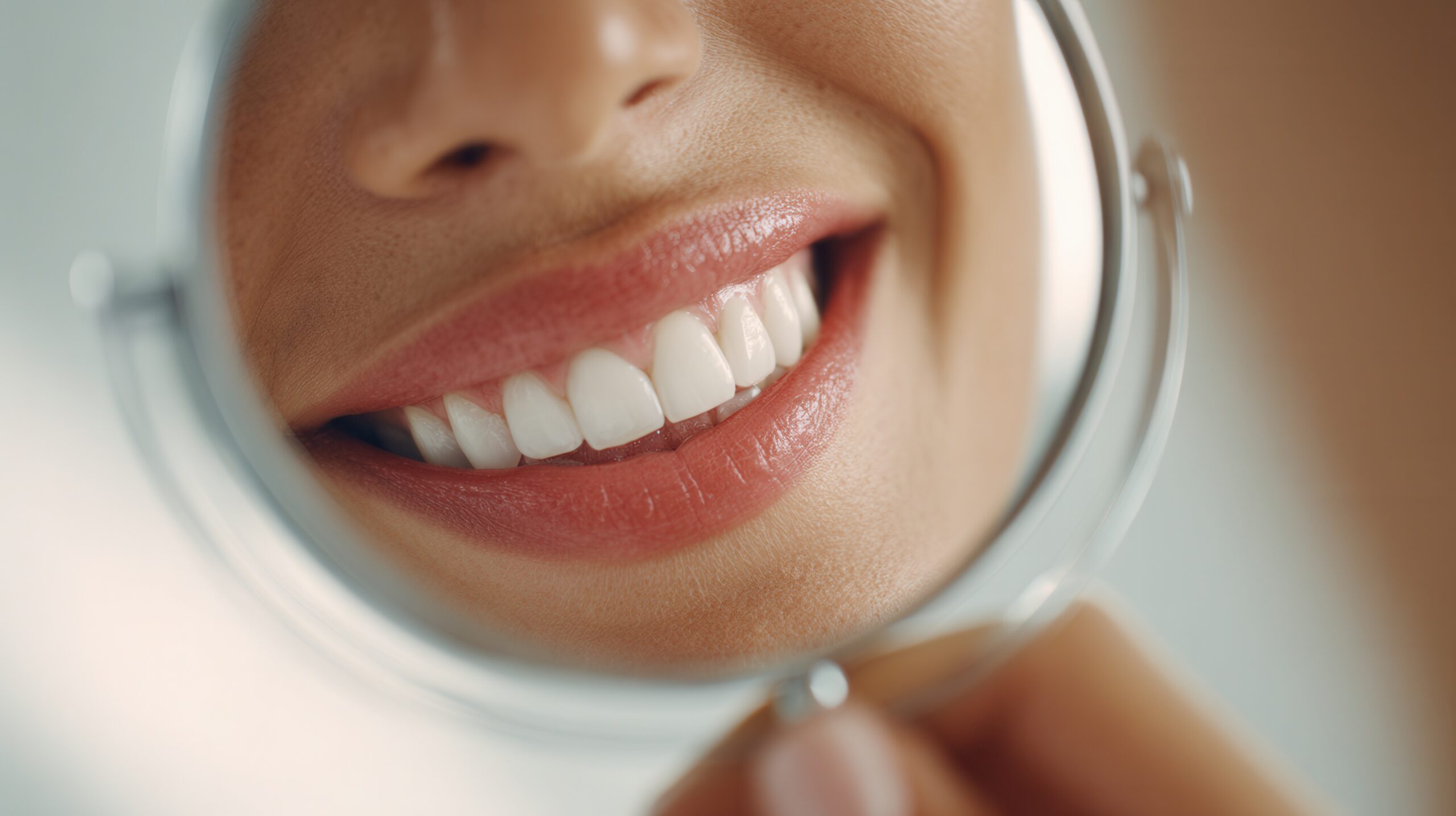
Porcelain veneers can change the appearance of teeth affected by discoloration, chips, small gaps, uneven proportions, worn enamel, and other cosmetic concerns. At Santa Monica Dental Studio, veneer treatment begins with evaluating more than tooth color alone. Your existing teeth, enamel, gums, bite, facial proportions, and overall goals all influence what will create a natural-looking result.
For patients considering porcelain veneers in Santa Monica, understanding those details before treatment is important. Veneers are custom ceramic restorations, and decisions about tooth preparation, ceramic material, smile design, and even whether another treatment should come first can affect the final outcome.
Some patients may benefit from Invisalign before veneers. Others may find that composite bonding or crowns are better suited to the condition of their teeth. A personalized consultation can help determine which approach makes sense for your smile.
What Are Porcelain Veneers?
Porcelain veneers are thin, custom-made ceramic restorations bonded to the visible surfaces of selected teeth. They can change the apparent color, shape, length, proportion, and spacing of teeth while being designed to complement the surrounding smile.
Unlike direct composite bonding, porcelain veneers are fabricated outside the mouth and then adhesively bonded to the teeth. Their shape, shade, translucency, and surface characteristics can be customized rather than relying on a standardized design.
Planning also involves determining how much tooth preparation is necessary and which ceramic can provide an appropriate balance of aesthetics and function.
Lithium Disilicate vs. Hand-Layered Feldspathic Porcelain
The ceramic used for a veneer can influence its strength, thickness, translucency, and overall appearance.
Lithium disilicate, commonly associated with e.max restorations, combines strength with favorable aesthetic characteristics. It may be considered when durability and functional demands are important factors in the treatment plan.
Hand-layered feldspathic porcelain is known for its optical qualities and ability to reproduce subtle variations in translucency, texture, and shade. These characteristics can be useful when the goal is to closely mimic the appearance of natural enamel.
There is no single material that is automatically right for every veneer case. Tooth position, available space, bite forces, desired changes, and the overall restorative design all help determine which ceramic is appropriate.
Conservative Tooth Preparation
Some porcelain veneers require preparation of the natural tooth to create adequate space for the restoration and establish the desired contours.
The amount of preparation varies. Tooth position, available enamel, existing discoloration, the desired cosmetic change, and the final ceramic design all influence how much tooth structure needs to be modified.
The objective is not simply to make a tooth smaller. Preparation should create an appropriate foundation for the veneer while preserving healthy natural tooth structure whenever clinically appropriate. Maintaining enamel can also provide a favorable surface for adhesive bonding.
Gum Health and Veneer Margins
The gums surrounding a veneer contribute to how the finished restoration looks and feels. Veneer margins need to be planned in relation to the tooth and surrounding gingival tissue rather than treated as a purely cosmetic detail.
Active gum disease, inflammation, or other periodontal concerns may need to be addressed before elective veneer treatment begins. Properly planned restoration contours and margins can help support periodontal health while creating a natural transition between the veneer and the gumline.
Also Read: What to Expect Before Getting Veneers in Santa Monica: Cost, Process, and Results
Porcelain Veneers vs. Other Cosmetic Treatments
Veneers are not the only way to change a smile. The right treatment depends on what needs to be corrected and the condition of the underlying teeth.
| Treatment | Often Considered For | Material/Approach | Tooth Preparation | General Timeline* |
|---|---|---|---|---|
| Porcelain Veneers | Discoloration, chips, gaps, worn enamel, shape and proportion concerns | Custom ceramic | Conservative preparation may be required | Usually several visits |
| Composite Bonding | Minor chips, small gaps, localized cosmetic changes | Direct composite resin | Often minimal or none | May be completed in one visit |
| Invisalign | Crowding, rotation, spacing, and selected bite concerns | Clear removable aligners | No tooth preparation for alignment | Usually several months |
| Dental Crowns | Severely damaged, fractured, or structurally compromised teeth | Full-coverage restoration | More extensive than veneer preparation | Usually multiple visits |
*Treatment time varies according to the individual case.
The distinction matters because veneers should not be used simply because a patient wants a particular procedure. If the primary concern is tooth position, orthodontic treatment may be more appropriate. If a tooth is substantially compromised, a crown may provide the coverage it needs. Smaller cosmetic concerns may sometimes be addressed more conservatively with bonding.
Are You a Candidate for Porcelain Veneers?
Wanting a whiter or more symmetrical smile is only one part of veneer candidacy. Your dentist also needs to determine whether your teeth and gums provide an appropriate foundation for ceramic restorations.
Porcelain veneers may be considered for concerns such as:
- Deep or intrinsic discoloration
- Fluorosis-related cosmetic concerns
- Tetracycline staining
- Chipped or worn enamel
- Uneven tooth lengths
- Small gaps
- Differences in tooth shape or proportion
- Selected minor rotations or alignment concerns
- Smile asymmetry
Because veneers can address several characteristics at once, they may be considered when a patient wants a broader change in tooth color, shape, and proportions rather than correction of one isolated concern.
When Veneers May Not Be the First Step
Healthy teeth and gums are an important foundation for elective cosmetic dentistry. Active decay, untreated periodontal disease, inadequate oral hygiene, insufficient enamel, or significant structural damage may need to be addressed before veneers are considered.
Your bite matters as well. Clenching and grinding can place substantial forces on ceramic restorations. Patients with bruxism may need a bite evaluation and, when appropriate, protective measures such as a custom nightguard.
Significant crowding, rotation, or bite problems can also change the treatment plan. In some cases, orthodontic treatment before veneers can provide a more conservative restorative starting point.
Should You Get Invisalign Before Porcelain Veneers?
Not every patient needs Invisalign before veneers. For the right case, however, repositioning the teeth before restorative treatment can create advantages that veneers alone cannot provide.
Crowded or rotated teeth can make it more difficult to achieve the desired veneer contours without removing additional tooth structure. Moving those teeth into more favorable positions first may allow the dentist to design the final restorations around a better-aligned dental arch.
This is an important distinction between moving a tooth and visually masking its position. Veneers can change how selected minor alignment discrepancies appear, but they do not physically move the teeth.
After orthodontic alignment, the final veneers can be designed around the resulting tooth positions, arch form, facial proportions, and smile. If the teeth are already appropriately positioned, preliminary Invisalign treatment may not be necessary.
What to Expect During the Porcelain Veneer Process
A well-planned veneer case begins before any irreversible treatment is performed. Your dentist first needs to understand what you want to change, evaluate the condition and position of your teeth, and determine how those goals can be achieved while preserving healthy tooth structure whenever possible.
Although every treatment plan is different, the process generally moves through several stages.
Consultation and Smile Design
Your first appointment focuses on understanding your smile rather than immediately preparing your teeth.
Your dentist evaluates your teeth, gums, existing dental work, bite, enamel, and cosmetic concerns. Tooth color, shape, proportions, gaps, wear, smile symmetry, lip position, and facial characteristics may all be considered when planning the proposed result.
Digital photographs, intraoral scans, and other diagnostic records may be used to document the existing smile and assist with planning. When digital smile design is incorporated into the case, it can help visualize potential changes in tooth length, shape, proportions, smile width, and overall appearance.
This is also the time to discuss what you consider natural. Some patients prefer subtle changes that closely resemble their existing teeth. Others want a brighter or more noticeable transformation. The design should reflect those preferences rather than applying the same smile template to every patient.
Trial Smile and Design Review
Depending on the treatment plan, a diagnostic mockup or trial smile may provide another way to evaluate the proposed changes before the definitive veneers are made.
A physical preview can help you see how changes in tooth length, width, contour, and proportions relate to your lips and overall smile. It also creates an opportunity to discuss preferences such as brightness, edge shape, tooth length, symmetry, and overall character.
Your dentist can also consider how the proposed design interacts with your bite. If tooth position makes the desired result difficult to achieve conservatively, this stage may reveal that orthodontic alignment or another treatment should be considered before proceeding.
Tooth Preparation and Temporaries
If veneers are appropriate, the teeth are prepared according to the restorative plan. Preparation requirements differ from one tooth and patient to another, with the goal of creating sufficient space for the ceramic while conserving healthy tooth structure whenever clinically appropriate.
Temporary veneers may be placed while the final ceramics are fabricated. In addition to protecting prepared teeth, temporaries can give you a preliminary sense of the planned tooth proportions and smile.
Some temporary sensitivity can occur after preparation. Any discomfort, bite concerns, or other changes should be discussed with the dental team so they can determine whether an adjustment is needed.
Custom Ceramic Fabrication
The definitive veneers are then fabricated according to the treatment plan and diagnostic information collected during the earlier stages.
Creating a natural-looking veneer involves more than choosing a shade. Tooth anatomy, translucency, surface texture, proportions, brightness, and the way ceramic reflects light all influence the finished appearance.
Natural teeth are not perfectly uniform. Subtle variations in translucency, texture, and color can therefore be incorporated when appropriate so the completed smile has balance without appearing artificially identical.
The selected ceramic, diagnostic records, photographs, scans, and approved smile design help guide fabrication of the restorations.
Try-In and Final Bonding
Before permanent bonding, the completed veneers are evaluated on the teeth. Your dentist can assess their fit, shade, shape, proportions, contacts, symmetry, smile line, and relationship to the surrounding teeth and facial features.
You may also have an opportunity to view the proposed appearance before final cementation.
Once the restorations and design are approved, the teeth and veneers are prepared for adhesive bonding. After placement, the dentist evaluates the bite and makes any necessary finishing adjustments.
The final result is therefore the product of the planning that occurred throughout the process, not simply the bonding appointment itself.
How Much Do Porcelain Veneers Cost in Santa Monica?
There is no universal cost per tooth that accurately applies to every veneer case. The investment depends on the number of teeth being treated, the ceramic selected, laboratory fabrication, complexity of the smile design, and whether other dental treatment is needed beforehand.
For example, treating a single tooth involves a different clinical and laboratory scope than designing six, eight, or ten veneers across the visible smile. Existing restorations, significant discoloration, alignment, bite considerations, and the degree of ceramic customization can also affect the treatment.
The most useful estimate is therefore one based on an actual treatment plan. After evaluating your teeth and discussing the result you want to achieve, Santa Monica Dental Studio can explain the recommended treatment and associated fees.
If you are interested in payment or financing options, ask the practice which options are currently available and whether any eligibility requirements apply.
Also Read: Cosmetic Dentist in Santa Monica: Advanced Smile Design, Veneers, and Dental Implants
What Makes Porcelain Veneers Look Natural?
Natural-looking veneers are not simply veneers that are less white.
The way a restoration fits the face and surrounding smile matters just as much as shade. Tooth length and width, edge shape, translucency, surface texture, smile line, lip position, and the relationship between neighboring teeth all contribute to how the finished veneers appear.
That is why customized smile design matters. One patient may prefer brighter, more symmetrical teeth, while another wants subtle variations that closely resemble natural enamel.
Ceramic selection also plays a role. Depending on the case, different materials and fabrication techniques can be used to balance optical characteristics, strength, available restorative space, and the desired appearance.
Why Choose Santa Monica Dental Studio for Porcelain Veneers?
Choosing a cosmetic dentist involves more than comparing the price of an individual veneer. Cosmetic treatment requires coordination between diagnosis, smile planning, tooth preparation, ceramic selection, laboratory fabrication, bonding, and long-term maintenance.
At Santa Monica Dental Studio, veneer planning begins with the individual smile. Your consultation can address tooth color, shape, proportions, smile width, existing alignment, bite considerations, and the changes you would like to see.
Digital diagnostic tools and smile-planning techniques may also be incorporated when appropriate to evaluate the relationship between the teeth and surrounding facial features. For patients considering multiple treatments, the planning process can also help determine whether Invisalign, restorative treatment, or another procedure should come before the veneers.
The goal is not to select a generic veneer design. It is to determine which treatment approach is appropriate for your teeth and develop a smile that reflects your individual anatomy and aesthetic preferences.
Frequently Asked Questions
How Much Do Porcelain Veneers Cost in Santa Monica, CA?
The cost varies according to the number of veneers, ceramic material, laboratory work, treatment complexity, and any preparatory dental care required. An examination and treatment plan are needed to provide an individualized estimate.
Are Porcelain Veneers Permanent?
Conventional porcelain veneers are generally considered an irreversible cosmetic treatment when tooth preparation is required. The veneers themselves do not necessarily last for the rest of your life and may eventually need repair or replacement.
How Long Do Porcelain Veneers Last?
Porcelain veneers can last many years, but there is no fixed lifespan. Longevity depends on factors such as restoration design and bonding, oral hygiene, bite forces, grinding or clenching, and patient habits. Regular dental care and appropriate protection can help maintain the restorations over time.
Does Getting Porcelain Veneers Hurt?
Local anesthesia may be used when tooth preparation is required. Some patients experience temporary sensitivity following preparation or placement, although the amount and duration vary according to the individual treatment.
What Is the Difference Between Porcelain Veneers and Composite Bonding?
Porcelain veneers are custom ceramic restorations fabricated outside the mouth and bonded to the teeth. Composite bonding uses tooth-colored resin that is applied and shaped directly on the tooth.
Bonding can be useful for smaller cosmetic changes and may require less tooth preparation. Veneers generally involve more extensive planning and laboratory fabrication and can address several cosmetic characteristics simultaneously.
Can I Get Porcelain Veneers if I Grind My Teeth?
Possibly. Grinding and clenching need to be considered because they can place additional forces on ceramic restorations. Your dentist may evaluate your bite and recommend a nightguard or other protective measures. Significant or uncontrolled bruxism can affect whether veneers are appropriate.
Why Might Invisalign Be Recommended Before Veneers?
If teeth are crowded, rotated, or positioned unfavorably, Invisalign may be used to improve their position before veneers are designed. In selected cases, better alignment can create a more favorable foundation for conservative restorative treatment. Not every veneer patient needs orthodontic treatment.
Will My Porcelain Veneers Look Natural or Overly White?
Veneers can be customized in shade, translucency, shape, texture, and proportion. A natural-looking result does not necessarily mean choosing the whitest possible ceramic. Your preferred brightness and degree of natural characterization can be discussed during the smile-design process.
How Do I Care for Porcelain Veneers?
Maintain consistent brushing, flossing, professional cleanings, and dental examinations. Avoid using veneered teeth to bite or open hard objects, and follow your dentist's recommendations if a nightguard is prescribed.
Do Porcelain Veneers Stain From Coffee, Wine, or Tea?
Dental porcelain is generally resistant to staining compared with natural tooth structure and composite resin. However, surrounding natural teeth can change shade over time, and the margins and overall smile still require regular oral hygiene and professional dental care.
How Many Porcelain Veneers Do I Need for a Smile Makeover?
There is no standard number. The appropriate number depends on which teeth are visible when you smile, the width of your smile, existing tooth proportions, and what you want to change. Some treatment plans involve several upper front teeth, while others may require fewer or more restorations.
What Is the Difference Between Prep and No-Prep Veneers?
Conventional veneers may require conservative enamel preparation to create appropriate space and contours for the ceramic. No-prep or minimal-prep approaches reduce or avoid preparation in selected cases, but they are not appropriate for every tooth.
Tooth size, position, available space, bite, existing color, and the desired cosmetic change all influence whether a minimal-preparation approach is appropriate.
Can Porcelain Veneers Fix Crooked or Gapped Teeth?
Veneers can visually change certain minor gaps, tooth-shape discrepancies, and selected alignment concerns, but they do not physically move teeth. More significant crowding or rotation may be better addressed with orthodontic treatment before cosmetic restoration.
Does Dental Insurance Cover Porcelain Veneers?
Porcelain veneers are commonly considered elective cosmetic treatment, so dental insurance may provide little or no coverage when treatment is performed solely for cosmetic reasons. Coverage varies by plan, so patients should verify their individual benefits directly with their insurer.
How Do I Schedule a Porcelain Veneer Consultation at Santa Monica Dental Studio?
Contact Santa Monica Dental Studio to request an appointment. During your consultation, you can discuss your cosmetic goals, candidacy, treatment options, expected treatment sequence, and personalized cost.