
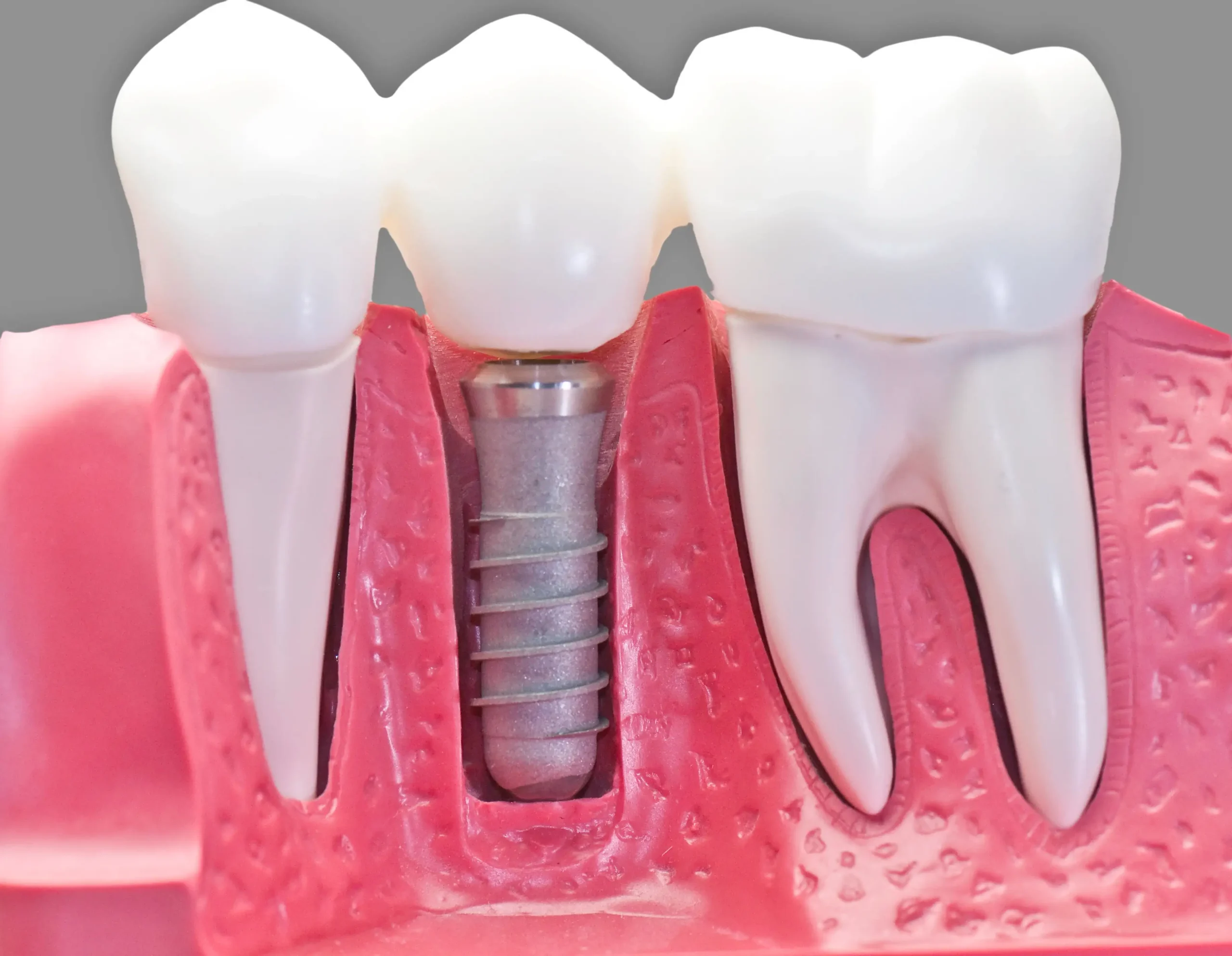
Dental implants are small titanium posts that replace the roots of missing teeth, supporting natural-looking replacement teeth that do not slip or need adhesives. For patients across the greater Los Angeles area, dental implants are a well-established option for replacing a single tooth, several teeth, or a full arch. Because they are anchored in the jawbone, implants can provide stable support for replacement teeth without relying on adhesives or, in many cases, neighboring teeth. Located in Santa Monica in the heart of LA County, Santa Monica Dental Studio provides implant care for patients throughout the Westside and surrounding Los Angeles communities. This guide explains how implants work, who they are right for, what they typically cost in the LA area, and how to care for them, so you can make an informed decision about your smile.
What Are Dental Implants?
A dental implant is a small titanium post that is surgically placed into the jawbone beneath the gumline, where it functions as an artificial tooth root. That post creates a stable foundation for a custom-made crown, bridge, or denture. The implant fixture replaces the missing tooth root, while a crown, bridge, or other restoration replaces the visible portion of the missing tooth or teeth. Because the restoration is supported by the implant, it can provide a stable fixed or removable tooth replacement depending on the treatment design. What distinguishes an implant from many other tooth replacement options is that the implant fixture replaces the missing tooth root and supports the restoration above it. This can provide strong, stable support for a crown, bridge, or full-arch restoration while avoiding the need for a removable adhesive-supported replacement.
How the Dental Implant Process Works, Step by Step
Initial Consultation and Evaluation
Treatment begins with a comprehensive consultation that includes digital X-rays and 3D cone beam scans. These images let the dentist evaluate the health of your jawbone, the position of your nerves, and the overall structure of your mouth, while also reviewing your medical history and your goals for treatment.
Bone Grafting, If Needed
Patients who do not have enough bone volume to support an implant may need bone grafting. Depending on the location and extent of the deficiency, grafting may be performed before implant placement or, in selected cases, at the same time. The amount of healing needed before the next stage varies according to the procedure and individual treatment plan.
Implant Placement Surgery
The implant is placed in the position established during treatment planning. Local anesthesia is used to keep the area comfortable during the procedure, and sedation may be available when appropriate. Some soreness, swelling, or tenderness can occur afterward, and the expected recovery depends on the number and location of implants and whether additional procedures are performed.
Osseointegration
After placement, the implant undergoes osseointegration, the biological process through which the surrounding bone forms a stable connection with the implant surface. Healing time varies based on the implant site, bone quality, overall health, and treatment plan. Your dentist will determine when the implant is ready to support the planned restoration.
Abutment and Crown Placement
Once the implant has integrated, a small connector piece called an abutment is attached to the top of the post. Impressions or digital scans are then taken to create your custom dental crown, and when the crown is ready it is attached to the abutment, completing your restoration.
Types of Dental Implants
Single Tooth Implants
When one tooth is missing, a single implant with a custom crown may provide a fixed replacement without requiring neighboring teeth to support the restoration. This can be particularly appealing when the adjacent teeth are healthy and would not otherwise need crowns.
Implant-Supported Bridges
When several adjacent teeth are missing, an implant-supported bridge can replace them using just two implant posts rather than one per tooth. The bridge spans the gap and is anchored securely at each end.
Implant-Supported Dentures
For patients missing all or most of the teeth in an arch, implants can support different types of full-arch restorations. Some implant-supported or implant-retained overdentures remain removable for cleaning but attach securely to implants for added stability. Other full-arch restorations are fixed to implants and are removed only by a dental professional. The appropriate design depends on the patient’s anatomy, number and position of implants, oral health, restorative needs, and preferences.
All-on-4 and All-on-6 Implants
All-on-4 and All-on-6 refer to full-arch treatment approaches in which multiple implants are used to support a fixed restoration. The number and position of implants depend on the patient’s anatomy, available bone, and treatment plan. Some patients may qualify for a temporary fixed restoration on the day of implant placement, while others need a different healing and restorative sequence.
Am I a Candidate for Dental Implants?
Many adults with one or more missing teeth can be considered for dental implants, but candidacy depends on more than age or the number of missing teeth. Your dentist will evaluate the amount and quality of available bone, gum and periodontal health, oral hygiene, bite, restorative space, medical history, medications, smoking or nicotine use, and other factors that may affect healing or long-term maintenance.
Having bone loss does not necessarily rule out implant treatment. Bone grafting or another treatment approach may be considered when additional support is needed. Active periodontal disease and poorly controlled medical conditions may need to be addressed before implant surgery. The consultation determines whether implants are appropriate and what preparation, if any, is needed first.
Benefits of Dental Implants
A Natural Look and Feel
Implant crowns can be customized for color, shape, size, and proportion so they blend naturally with surrounding teeth. The final appearance depends on factors such as implant position, available bone and gum tissue, restorative design, and the location of the missing tooth.
Preservation of the Jawbone
Bone in an area where a tooth has been lost can change over time. Because an implant is anchored in the jaw and receives functional loading, it can help maintain bone around the implant site. However, implants do not eliminate the possibility of future bone loss, which is one reason ongoing oral hygiene and professional maintenance remain important.
Long-Term Durability
Dental implants are designed as a long-term tooth replacement option, and many remain functional for decades with appropriate care. Longevity depends on oral hygiene, gum and bone health, smoking or nicotine use, systemic health, bite forces, restoration design, and regular professional maintenance. The crown or other restoration attached to the implant may require repair or replacement over time because of normal wear or changes in the mouth.
Improved Oral Health
When adjacent teeth are healthy, a single implant can replace a missing tooth without requiring those teeth to be prepared for crowns. Implant restorations still require consistent daily cleaning and professional maintenance to support the health of the surrounding gums and bone.
Restored Confidence
Missing teeth can affect chewing, speech, appearance, and confidence. For appropriately selected patients, implant-supported replacement teeth can improve stability and function while restoring the appearance of missing teeth. For patients who are also considering changes to the appearance of their smile, our cosmetic dentistry options can be discussed as part of a broader treatment plan.
Dental Implants vs. Other Tooth Replacement Options
Implants vs. Dentures
Traditional removable dentures replace multiple missing teeth without requiring implant surgery and may be appropriate for patients based on their oral health, anatomy, budget, or personal preferences. Because they rest primarily on the gums, some patients experience movement or changes in fit over time.
Implant-supported options use implants for additional support and can provide greater stability during speaking and chewing. They also involve surgery, healing, ongoing maintenance, and a higher initial investment. The better option depends on the patient’s health, anatomy, goals, and ability to maintain the restoration.
Implants vs. Bridges
A traditional dental bridge uses neighboring teeth to support the replacement tooth, while a single implant supports its own crown. When the adjacent teeth are healthy, an implant may avoid the need to prepare them for crowns.
A bridge can still be an appropriate option, particularly when neighboring teeth already require crowns or when implant surgery is not desired or clinically appropriate. Treatment planning should consider the condition of the adjacent teeth, available bone, overall health, timeline, cost, and patient preference.
How Much Do Dental Implants Cost in Los Angeles?
Dental implant cost in Los Angeles varies because treatment may involve several components. The final fee can depend on the number of implants, diagnostic imaging, whether an extraction or bone graft is needed, the type of implant restoration, and the complexity of treatment.
When comparing implant prices, ask what the quoted amount includes. A price for the implant fixture alone is different from a treatment estimate that includes the implant, abutment, final crown, imaging, and any additional procedures. Dental insurance coverage also varies by plan. Santa Monica Dental Studio can provide an individualized treatment estimate after evaluating your needs and review available payment or financing options.
Caring for Your Dental Implants
Dental implants still require consistent daily hygiene and professional maintenance. Patients should brush thoroughly and clean around the implant and restoration using the method recommended by their dental team. Implant-supported bridges and full-arch restorations may require additional cleaning techniques to reach beneath the restoration.
Regular dental examinations and professional cleanings allow the team to monitor the surrounding gums and bone, the implant restoration, and the patient’s bite. Avoid using implant restorations or natural teeth as tools, and follow individualized recommendations regarding oral hygiene, smoking or nicotine use, and protection against excessive bite forces.
Choosing a Dental Implant Provider in Los Angeles
Choosing an implant provider involves more than finding a dentist who places implants. Treatment planning needs to account for the condition of the bone and gums, implant position, the design of the final restoration, bite forces, aesthetics, and how the restoration will be maintained over time.
At Santa Monica Dental Studio, implant treatment begins with an individualized evaluation and treatment plan. The team discusses the condition of the missing-tooth area, available replacement options, anticipated treatment sequence, and the restorative result before treatment moves forward. Based in Santa Monica within Los Angeles County, the practice serves patients throughout the greater Los Angeles area, including West Los Angeles, Brentwood, Pacific Palisades, and surrounding Westside communities. Learn more about our dental implant services in Santa Monica.
How long do dental implants last?
Dental implants are designed for long-term use, and many remain functional for decades. There is no guaranteed lifespan. Longevity depends on oral hygiene, gum and bone health, smoking or nicotine use, overall health, bite forces, restoration design, and professional maintenance. The crown, bridge, or other restoration attached to the implant may need repair or replacement sooner than the implant itself.
Are dental implants painful?
Local anesthesia is used during implant placement to control discomfort during the procedure. After surgery, temporary soreness, swelling, bruising, or tenderness can occur. Recovery varies depending on the number and location of implants and whether procedures such as extraction or bone grafting are performed at the same time. Your dentist can explain what to expect and how postoperative discomfort should be managed.
How much do dental implants cost in Los Angeles?
The cost of dental implants in Los Angeles depends on the number of implants, type of restoration, diagnostic imaging, need for extraction or bone grafting, and overall treatment complexity. Because implant estimates may include different components, ask what is included in any quoted price. Santa Monica Dental Studio provides an individualized estimate after evaluating your treatment needs.
Does dental insurance cover implants?
Coverage varies widely by plan. Some plans cover a portion of the procedure, particularly the crown, while others do not cover implants at all. Our team can review your benefits during your consultation and help you understand what may be covered, and we offer financing plans for any remaining balance.
How long does the dental implant process take from start to finish?
Dental implant treatment often takes several months, but there is no single timeline that applies to every patient. Healing time depends on factors such as the implant location, bone quality, whether extraction or grafting is required, implant stability, and the type of final restoration. Some patients may qualify for immediate implant placement or a temporary restoration, while others require additional healing between stages.
What happens if I do not have enough bone for an implant?
Bone can lose volume after a tooth has been missing, but insufficient bone does not automatically rule out an implant. Depending on the location and extent of bone loss, grafting may be considered to create adequate support for implant placement. Whether grafting is needed, when it is performed, and how long it needs to heal depend on the individual treatment plan.
Can I get a dental implant right after a tooth extraction?
In selected cases, an implant can be placed during the same appointment as a tooth extraction. This is known as immediate implant placement. Whether it is appropriate depends on factors such as the condition of the extraction site, available bone, gum tissue, infection or inflammation, and the ability to achieve adequate implant stability.
Are dental implants safe?
Dental implants have a long history of clinical use and are generally considered a predictable treatment for appropriately selected patients. As with any surgical procedure, complications can occur, including infection, failure of the implant to integrate, damage to nearby structures, and problems involving the surrounding bone or gum tissue. Careful evaluation, treatment planning, surgical technique, and long-term maintenance all contribute to reducing risk.
What is the success rate of dental implants?
Dental implants have demonstrated high long-term survival rates, but there is no single success percentage that applies to every patient or implant. Outcomes vary based on implant location, bone and gum health, smoking or nicotine use, medical conditions, oral hygiene, restoration design, and the length of follow-up. Your dentist can discuss the factors that may affect the prognosis of your individual implant.
Is there an age limit for dental implants?
Implant treatment is generally considered after jaw growth is complete. For older adults, chronological age by itself does not determine candidacy. Oral health, available bone, medical history, medications, healing capacity, ability to maintain the restoration, and overall treatment goals are more important considerations. Patients of many ages can be candidates after an individualized evaluation.
Schedule Your Dental Implant Consultation
If you are considering dental implants in Los Angeles, schedule a consultation at Santa Monica Dental Studio. Your visit is an opportunity to evaluate your oral health, discuss your goals and tooth replacement options, and determine whether implant treatment is appropriate for you. If implants are recommended, the team can explain the proposed treatment sequence, expected timeline, and individualized cost before you decide how to proceed.