
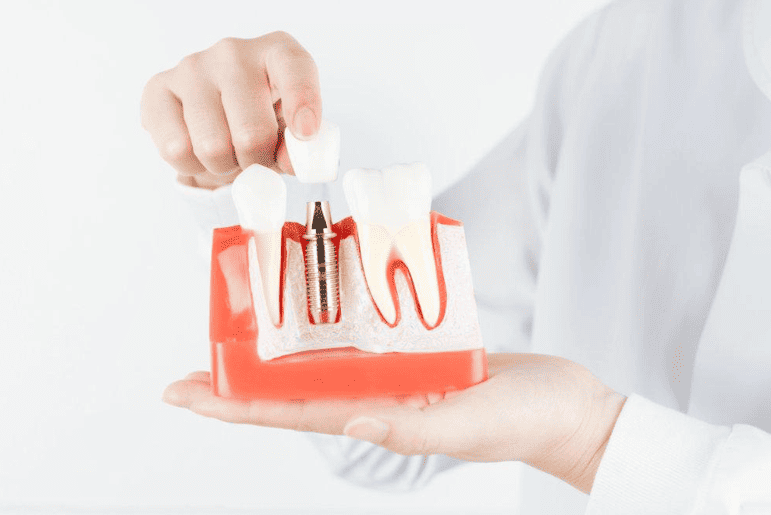
Dental implants are built to last many years, often decades, when they are placed and cared for properly. But the visible part of the implant, the crown or bridge on top, doesn’t always last as long as the implant itself. Porcelain can chip, cement can weaken, and small parts inside the restoration can wear down with everyday use.
Implant restoration focuses on repairing or replacing the visible portion of the implant while preserving the underlying implant post whenever possible. If your implant crown feels loose, looks worn, or has come off completely, the implant underneath is often still healthy and stable. The problem usually sits in the restoration, not the implant post. At Santa Monica Dental Studio, we focus on evaluating, repairing, and rebuilding the part of the implant you actually see and use every day, so you can chew comfortably and smile with confidence again.
Implant Restoration in Santa Monica: Quick Answer
Implant restoration repairs or replaces the visible portion of a dental implant, such as the crown, bridge, or denture, while preserving the implant post when it remains healthy. At Santa Monica Dental Studio, we restore implants placed both in our office and by other providers after evaluating the implant, surrounding bone, and restoration to determine the most appropriate treatment.
What Is Implant Restoration?
Many patients use the word “implant” to describe the whole tooth replacement, but an implant is actually just one piece of a larger system. The implant itself is the small titanium post placed inside the jawbone. It acts like an artificial tooth root, and once it heals, it stays fixed in the bone.
Implant restoration refers to everything that sits on top of that post: the abutment, which connects the implant to the visible tooth, and the crown, bridge, or denture that sits on the abutment. The crown is the part that looks and functions like a natural tooth. When people say their “implant broke” or “came loose,” they are almost always describing a problem with the crown or abutment, not the implant post buried in the bone. Understanding this difference matters because it changes what kind of treatment is actually needed.
Signs Your Implant Restoration May Need Attention
Restorative problems rarely show up without warning. Many patients notice small changes before anything comes apart completely, and paying attention to these early signs can prevent a bigger issue later.
Common signs to watch for include:
- A loose implant crown that shifts slightly when you bite down
- A crown that has visibly cracked or chipped along the edges
- Food getting trapped near the restoration more than before
- A noticeable change in how your bite comes together
- A crown that keeps coming loose again and again, even after it has been recemented
A restoration that repeatedly loosens after recementing is a clear signal that something needs a closer look rather than a quick fix.
What Causes Implant Restorations to Wear Out?
Implant restorations experience the same daily forces as natural teeth, and over time, that adds up. Chewing, biting, and everyday wear slowly break down the materials used in the crown, especially at the edges and contact points with neighboring teeth.
Grinding or clenching, often at night, is one of the most common reasons a dental implant restoration wears down faster than expected. Trauma from an accident or biting something hard can crack porcelain or loosen the screw that holds the crown in place. Restorations also age simply from time, and shifts in the surrounding natural teeth can change how forces are distributed across the bite. None of these causes is unusual, and most can be addressed once they are identified.
Types of Implant Restorations We Restore
Single Implant Crown
A single implant crown replaces one missing tooth. It attaches to a single implant post through an abutment and is shaped to match the surrounding teeth in size, color, and bite alignment. When this type of restoration fails, it is usually due to chipped porcelain, a loose screw, or wear on the biting surface.
Implant-Supported Bridge
An implant bridge restoration replaces several missing teeth in a row, supported by two or more implants rather than one per tooth. Because a bridge spans multiple teeth, extra force from any single implant can affect the entire structure. Restoring a bridge often means addressing wear points, loose connections, or a crack in a single section without having to redo the entire bridge.
Implant-Supported Denture
An implant-supported denture snaps or locks onto a small number of implants to hold a full arch of replacement teeth securely in place. Over time, the attachments inside the denture can wear down, causing the denture to feel loose even though the implants themselves remain solid. Implant denture repair typically involves replacing these small internal parts rather than remaking the entire denture.
Can an Implant Be Restored if It Was Placed by Another Dentist?
This is one of the most common questions we hear, and the answer is often yes. Many patients moved to Santa Monica, changed dentists, or had their implant placed years ago by a provider they no longer see. In most cases, we can evaluate the existing implant and determine whether it is a good candidate for a new restoration.
The process starts with digital imaging to check the implant’s position, bone support, and overall condition. We also need to identify the implant system and manufacturer, since different companies use different connection designs, and the abutment or crown must match the exact system in place. Once compatibility is confirmed, we can proceed with restoring the implant using the appropriate components. If the implant system cannot be identified or the implant shows signs of instability, we can discuss which options make sense based on our findings.
The Implant Restoration Process
Every implant restoration begins with a thorough evaluation to determine whether the existing implant is healthy enough to support a new restoration. While treatment varies from patient to patient, the process typically includes:
- Comprehensive implant evaluation and digital imaging
- Bite evaluation to see how upper and lower teeth meet and where pressure is concentrated
- Digital impressions to capture precise measurements without messy trays
- Custom fabrication of the new crown, bridge, or denture component
- Final placement, checked and adjusted for fit, comfort, and bite alignment
Each step exists to make sure the final restoration fits well and functions properly, not just that it looks acceptable. Skipping steps like bite evaluation often leads to the same problems returning within a year or two.
Implant Crown Replacement vs. Implant Replacement
One of the biggest misconceptions patients have is that a broken or loose crown means the implant has failed. In reality, this is rarely the case. The implant post is designed to integrate with bone and stay fixed long after the crown on top has worn down.
Many patients only need implant crown replacement, a new abutment, or a repair to the existing restoration. Full implant replacement, which involves surgical removal and reinsertion, is only necessary if the implant itself has failed, become infected, or lost bone support. Determining which category a patient falls into requires imaging and a direct exam, not assumptions based on symptoms alone.
Caring for Your Implant Restoration
Good daily habits make a real difference in how long an implant restoration lasts. Brushing twice a day and flossing around the implant crown helps prevent buildup that can affect the surrounding gum tissue and the fit of the restoration over time.
Professional cleanings allow us to check the restoration for early signs of wear before they become bigger problems. Patients who grind their teeth at night should wear a night guard, as this habit is one of the most common causes of early restoration failure. Routine exams, along with avoiding excessive force, such as chewing ice or hard candy, go a long way toward protecting your investment.
What Patients Often Overlook About Implant Restoration
A few details tend to surprise patients when they first come in for an evaluation. The implant post is frequently in excellent condition even when the crown on top looks worn or damaged, since the crown takes the daily wear first.
A loose crown should never be ignored, even if it doesn’t hurt, because continued movement can damage the abutment or the connection point over time. Small chips in porcelain tend to worsen rather than stay the same, especially if biting forces continue to hit that spot. Patients who grind their teeth shorten the lifespan of any restoration, implant or natural tooth, and routine maintenance visits genuinely extend how long a restoration lasts before it needs attention.
Why Choose Santa Monica Dental Studio for Implant Restoration?
We use digital imaging and impression technology to get an accurate picture of your implant and bite before any restoration is made. This reduces the guesswork and helps the final crown, bridge, or denture component fit correctly the first time. Every restoration is custom-fabricated to match your bite and the appearance of your surrounding teeth. We also evaluate and restore many implants placed by other providers, helping patients preserve healthy implants whenever possible instead of assuming replacement is necessary.
Our approach pays close attention to how your bite comes together, since an incorrect bite is one of the most common reasons restorations fail early. We also focus on comfort throughout the process and take time to explain what we find during the evaluation, so you understand your options before any treatment begins. Whether your implant was placed here or elsewhere, our goal is to restore its function and appearance with a long-lasting restoration.
Why Choose Dr. Sadat for Dental Implants in Santa Monica?
Choosing to get dental implants is one of the most significant decisions you can make for your oral health, and choosing the right dentist to guide you through it matters just as much. At Santa Monica Dental Studio, Dr. Fahtema Sadat brings the knowledge, technology, and personal attention needed to help you feel informed and confident from your very first consultation.
Dr. Sadat takes a comprehensive approach to implant treatment, beginning with advanced digital imaging and a thorough evaluation of your bone density, gum health, and overall oral condition. She walks you through your options clearly, including whether bone grafting may be needed, what the timeline looks like, and what you can realistically expect in terms of comfort and recovery. There are no surprises and no pressure.
Patients who have gone through the implant process with Dr. Sadat often describe the experience as far less intimidating than they expected. That is by design. She and our Santa Monica team are committed to making a complex, multi-stage treatment feel manageable, supported, and worthwhile. The result, a permanent, natural-feeling tooth, genuinely is.
Ready to take the first step? Call us at 310-453-4488 or request your implant consultation.
If your implant crown has become loose, chipped, worn, or detached, call our office at 310-453-4488 or send us a message to schedule an implant restoration evaluation.
Answers about implant restoration
What is a dental implant restoration?
It is the visible part of an implant system, including the abutment and crown, bridge, or denture that attaches to the implant post.
Can a dental implant be restored without replacing the implant post?
Yes. In many cases, only the crown or other restoration needs to be replaced while the implant post remains healthy. An evaluation confirms the best treatment option.
Can a dental implant crown be replaced without replacing the implant?
Yes, in many cases. The implant post typically remains healthy even when the crown needs replacement.
How do I know if my implant crown needs to be replaced?
Signs include looseness, visible cracks or chips, difficulty chewing, or a crown that keeps detaching.
Can you restore a dental implant that was placed by another dentist?
Often yes, after we confirm the implant system and check the condition of the implant through imaging and exam.
What causes an implant crown to become loose or damaged?
Common causes include grinding, biting forces, trauma, and normal wear over time.
How long does a dental implant restoration typically last?
Many restorations last several years, though this varies based on habits like grinding and how well they are maintained.
What types of implant restorations do you provide?
We restore single implant crowns, implant-supported bridges, and implant-supported dentures.
What happens during an implant restoration appointment?
Evaluation, imaging, bite assessment, digital impressions, restoration fabrication, and final fitting and adjustment.
Will I need a new implant if my implant crown breaks?
Usually not. A broken crown does not mean the implant has failed.
Can a loose implant crown be repaired?
Yes, depending on the cause. Some cases need recementing, while others require a new crown or abutment.
How do you determine if my existing implant can be restored?
We use digital imaging to assess bone support and implant condition and to identify compatible implant systems and parts.
How should I care for my implant restoration to help it last longer?
Brush and floss daily, attend regular cleanings, wear a night guard if you grind your teeth, and avoid biting hard objects.
Does implant restoration hurt?
Most restoration procedures are minimally invasive and involve little to no discomfort.
How much does dental implant restoration cost in Santa Monica?
Cost depends on the type of restoration needed and the condition of the existing implant. We provide a clear estimate after your evaluation.
Ready to get started?
Don't assume the entire implant needs to be replaced — in many cases, restoring the crown or other prosthetic components is all that's needed to return your smile to full function.